


Which Leather Is Good for a Sofa? Top 10 Best Types of Leather for Sofas (Ranked by Real-World Use)

Choosing a leather sofa is rarely about “leather vs fabric.” It is about which leather—because leather is not one material. It is a category with multiple grades, surface treatments, and finishes that can feel completely different in daily life.
Two sofas can both be marketed as “leather,” yet one feels warm, supple, and quietly luxurious while the other feels slick, plastic-like, and disappointingly uniform. One develops character over time; the other looks tired quickly. One works well for children and pets; the other demands a careful lifestyle.
So when you ask, “Which leather is good for a sofa?” the correct answer is not a single word. The best leather depends on:
-
how you use your sofa (formal seating vs TV lounging)
-
your household (kids, pets, guests, work-from-home)
-
your climate (humidity, sunlight, air-conditioning cycles)
-
your tolerance for maintenance
-
and your desired aesthetic (uniform vs natural character)
This guide ranks the Top 10 best types of leather for sofas, explains what each is, when it is a smart choice, and when it is not. It also clarifies the common confusion around “genuine leather,” PU leather, faux leather, nubuck, and what “grain” actually means.
First: What makes leather “good” for a sofa?
A sofa is a high-contact surface. You don’t just look at it—you live on it. That means “good leather” for a sofa must perform in these practical areas:
-
Touch comfort: does it feel pleasant against skin for long sits?
-
Breathability perception: does it feel overly sealed, sticky, or sweaty?
-
Resistance to daily wear: how does it handle friction, oils, and movement?
-
Aging behavior: does it develop patina or show damage quickly?
-
Ease of maintenance: can you live normally without constant worry?
-
Appearance stability: does it keep its tone and finish with time?
With those criteria, here is the ranked list.
Top 10 Best Types of Leather for Sofas
#1 Full-Grain Leather (Best overall for natural feel and character)
What it is: Full-grain is the top layer of the hide with the natural grain intact. It is not sanded to remove natural marks, so it retains authentic texture and variation.
Why it’s good for sofas:
-
premium, natural hand feel
-
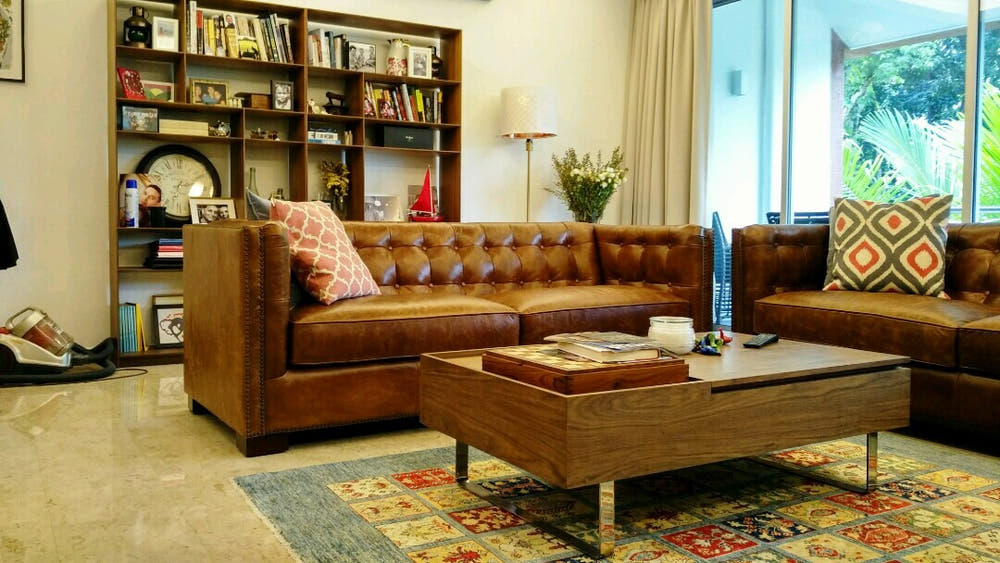
develops patina (character) with use
-
often feels warmer and more “alive” than heavily coated leather
-
tends to look better as it becomes lived-in (when cared for properly)
Best for:
-
buyers who value tactile comfort and natural texture
-
statement sofas and long-term ownership
-
people who appreciate patina rather than perfect uniformity
Considerations:
-
shows natural marks and variation (some buyers love this; others don’t)
-
requires reasonable care (not complicated, just consistent)
Verdict: If your definition of “good leather” includes authentic touch and evolving character, full-grain is typically the benchmark.
#2 Top-Grain Leather (Best balance of refinement and practicality)
What it is: Top-grain is also from the top layer, but it may be lightly corrected (sanded) and finished for a more uniform appearance.
Why it’s good for sofas:
-
can look cleaner and more uniform than full-grain
-
often easier to maintain (depending on finish)
-
still offers real leather comfort and a premium experience
-
widely used in quality furniture because it balances lifestyle and aesthetics
Best for:
-
families who want a premium leather feel with fewer visual surprises
-
modern interiors where uniformity matters
-
buyers seeking a practical luxury choice
Considerations:
-
patina development depends heavily on the finish
-
overly heavy coatings can reduce natural feel
Verdict: For many households, top-grain is the most sensible “high quality” leather choice.
#3 Semi-Aniline Leather (Best comfort-forward finish)
What it is: Semi-aniline refers to a finish type rather than a grain type. It usually means a light protective topcoat over an aniline-dyed base.
Why it’s good for sofas:
-
softer, more natural touch than fully pigmented leather
-
more protection than pure aniline
-
a refined look that still feels authentic
Best for:
-
people who want comfort and a natural feel but still need some protection
-
upscale living rooms and frequent daily use (with normal care)
Considerations:
-
can be more sensitive than heavily pigmented leather
-
not ideal for extremely rough use without care
Verdict: If touch is your priority, semi-aniline is often a premium sweet spot.
#4 Aniline Leather (Best for luxury feel, but highest lifestyle sensitivity)
What it is: Aniline leather is dyed through without heavy surface coatings. It is prized for natural beauty and softness.
Why it’s good for sofas:
-
exceptionally rich, natural feel
-
beautiful depth of color
-
patina can be stunning
Best for:
-
design-led homes where the sofa is treated carefully
-
owners who want maximum leather authenticity
-
lower-risk environments (no messy kids/pets, controlled sunlight)
Considerations:
-
more prone to staining and fading
-
requires careful placement (avoid strong direct sunlight)
-
not ideal for households that want “worry-free”
Verdict: Aniline is “good” if you want the most luxurious feel and accept the maintenance trade-offs.
#5 Corrected-Grain Leather (Best for uniform look and easy maintenance, not for purists)
What it is: Corrected leather is sanded and treated to remove natural marks, then coated and often embossed to look uniform.
Why it can be good for sofas:
-
consistent appearance across panels
-
typically easier to clean
-
often more stain-resistant than natural finishes
-
practical for high-traffic homes
Best for:
-
families with kids
-
high-use living rooms
-
buyers who want leather look with low visual variation
Considerations:
-
less natural touch; can feel more sealed
-
patina is limited; aging is usually cosmetic wear rather than character development
Verdict: Corrected leather is good for practicality and uniformity, not for those chasing a natural leather experience.
#6 Split-Grain Leather (Best used strategically, not as the main selling point)
What it is: Split leather comes from the lower layers of the hide after the top-grain is separated. It is often finished to resemble higher grades.
Why it can be used for sofas:
-
can be real leather at a lower cost
-
sometimes used on low-contact panels in cost-controlled builds
Best for:
-
buyers who want real leather components within a controlled budget
-
secondary sofas or lower-use spaces
Considerations:
-
generally less premium feel than top/full-grain
-
aging and surface behavior depend heavily on finishing
Verdict: Split leather can be acceptable, but it is rarely the “best” for primary seating surfaces.
#7 Nubuck Leather (Best for soft touch, but not for low-maintenance lifestyles)
What it is: Nubuck is top-grain leather that has been sanded or buffed on the grain side to create a velvet-like surface.
Why people love it:
-
extremely soft, tactile, and matte
-
luxurious, warm appearance
-
feels distinctive and premium
Best for:
-
adults-only spaces
-
style-first interiors
-
owners who enjoy leather care and maintenance routines
Considerations:
-
more sensitive to stains and oils
-
requires careful cleaning methods
-
can show marks easily
Verdict: Nubuck can be “good” if you prioritize softness and accept higher care needs.
#8 Bonded Leather (Budget-friendly, but lowest real-leather value)
What it is: Bonded leather is made from leather scraps bonded with adhesives and coated to resemble leather.
Why it exists:
-
lower cost
-
uniform look initially
-
marketed as leather in many entry-level products
Considerations:
-
does not behave like full sheets of leather
-
can peel or degrade in a way real leather does not
-
often has limited long-term satisfaction
Verdict: Bonded leather is generally not recommended if you want a true leather sofa experience.
#9 Faux Leather / Synthetic Leather (General category for leather-look materials)
What it is: Faux leather is an umbrella term for non-leather materials designed to look like leather (PVC, PU, microfibers, etc.).
Why it can be good:
-
budget-friendly
-
consistent appearance
-
can be easy to clean
-
suitable for short-term use or rentals
Considerations:
-
touch can feel less breathable and more plastic-like
-
aging is often not graceful (cracking, peeling depending on quality)
Verdict: Faux leather is “good” only if your priority is cost and convenience over authentic leather feel.
#10 PU Leather (Common faux leather subtype; practical, but not true leather)
What it is: PU (polyurethane) leather is a common synthetic leather with a PU coating over a fabric base.
Why it can be good:
-
widely available and affordable
-
can look convincing from a distance
-
easy to wipe clean
Considerations:
-
can feel less natural to touch
-
may crack or peel depending on heat/humidity and quality
-
does not develop patina like real leather
Verdict: PU is a reasonable choice for budget or temporary needs, not for buyers seeking the leather experience.
Important clarification: “Genuine Leather” is not a top-tier type
Many listings use “genuine leather” as if it means premium. In reality, “genuine leather” simply indicates that real leather exists in the product—it does not specify grade.
A “genuine leather sofa” could be top-grain, corrected grain, split leather, or a mix. Always ask what grade and what finish are used on seating surfaces.
So, which leather is good for a sofa? A decision shortcut
If you want the best natural feel and character:
Full-grain (or semi-aniline top-grain)
If you want a premium balance of beauty and easy living:
Top-grain with a practical finish (often semi-aniline or well-done pigmented top-grain)
If you have kids/pets and want low-stress maintenance:
Corrected-grain or protected top-grain (more uniform, more resistant)
If you want ultra-soft luxury and accept maintenance:
Nubuck or aniline
If budget is the main priority:
High-quality faux leather/PU can be acceptable short-term, but understand you are buying convenience, not leather evolution.
Final takeaway: “Good leather” depends on your lifestyle, not marketing labels
The best leather for a sofa is the one that matches how you live.
If your goal is the authentic leather experience—warmth, richness, and a surface that becomes more personal—full-grain and high-quality top-grain lead the market. If your goal is worry-free maintenance in a busy home, corrected-grain may be a smarter, more practical “good leather” choice.
The key is not to shop by slogans like “genuine leather.” Shop by:
-
leather grade (full-grain, top-grain, corrected, split, bonded)
-
finish type (aniline, semi-aniline, pigmented)
-
and your real-world usage (kids, pets, climate, lounging habits)
That is how you choose leather that is truly good for your sofa—and good for your life.